No products in the cart.
Your Location:
>
Art gallery and gallery lighting
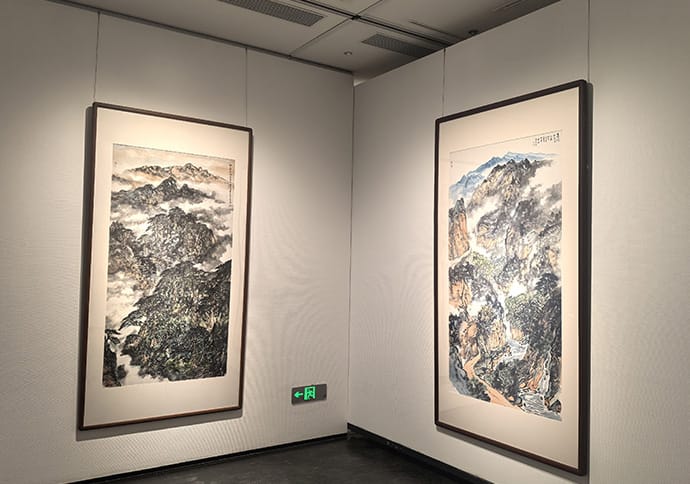
Art gallery and gallery lighting is a combination of environmental lightingand key lighting. According to the different exhibits, it is dividedinto paintings, sculptures, special exhibit lighting, key exhibitsand other lighting types.The lighting design and applicationshould be arranged according to the audience’s visit route.For example, guide the audience’s eyes to naturally transitionfrom one exhibit to the next, using the light and shade of thelights and color changes to enhance the rhythm of the visit.

>
Environmental lighting
Art gallery lighting is a combination of environmental lighting and key lighting. According to the different exhibits, it is divided into paintings, sculptures, special exhibit lighting, key exhibits and other lighting types. The lighting design and application should be arranged according to the audience’s visit route. For example, guide the audience’s eyes to naturally transition from one exhibit to the next, using the light and shade of the lights and color changes to enhance the rhythm of the visit.
>
Key lighting
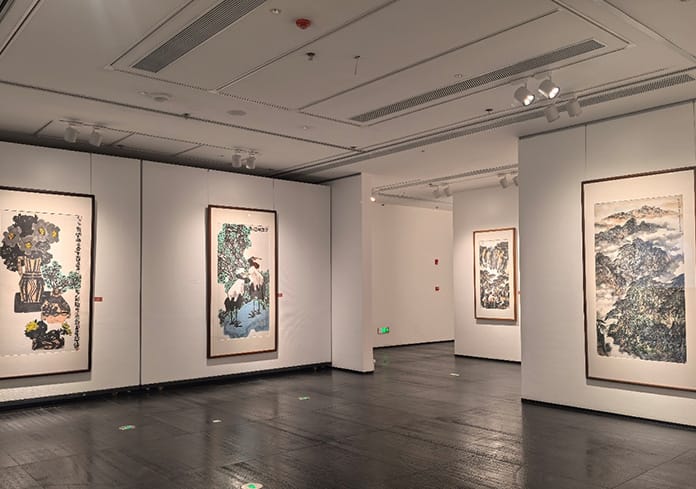
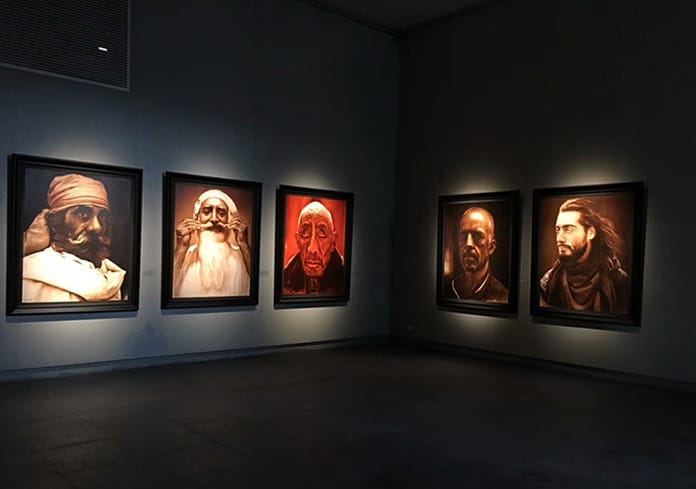
Key lighting is used to highlight the details and characteristics of works of art. Choose different lamps and angles according to the type of art and display needs. For example, when displaying sculptures, key lighting can be carried out from multiple sides to show their three-dimensional sense; for paintings, key lighting at an angle of about 45 degrees on both sides can reduce reflection and highlight the picture. At the same time, the lighting quality should be soft and clear, there should be no secondary stray light, and the uniformity of the picture should meet the requirements of more than 0.6.

>
High color rendering adjustable focus lamp
With adjustable-focus lamps, the color rendering index (Ra) should reach more than 95 to ensure that the color of the artwork can be truly restored. You can clearly see the true color of the paint in the painting and the true color of the sculpture material. It can also meet the use of lighting of works of art of different sizes and forms. For large paintings or sculptures, a wide beam angle can be used to illuminate evenly; for small works of art, such as jewelry, small handicrafts, etc., a narrow beam angle can be selected for focused lighting. For lamps with a zoom range of 9°-50°, the scope of application can meet 99% of the application scenarios.
>
Combination of key lighting and ambient lighting
Highlight the details, textures, colors and shapes of the exhibits through key lighting to attract the attention of the audience. At the same time, environmental lighting is used to create a comfortable and soft overall atmosphere, so that the audience’s vision can naturally transition between the exhibits and the space. For example, when a spotlight is used as a key lighting fixture to illuminate the exhibits at an angle of 30°-50°, the ratio of illumination to ambient lighting can be controlled between 3:1 and 5:1, which can highlight the exhibits without causing a strong visual contrast.

>
Painting illumination
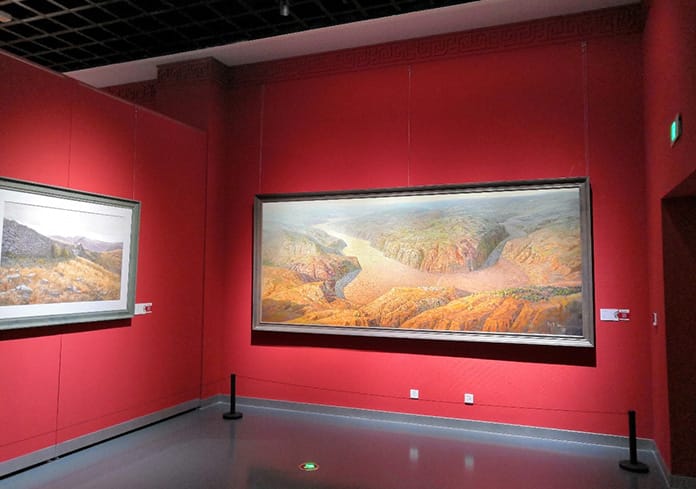
For large-scale paintings, ambient light should be used first to provide overall uniform background lighting to prevent shadows. Then use the spotlight to illuminate the painting from an oblique top (such as a 30-45-degree angle), highlighting details such as brushstrokes, color layers, etc. For example, when displaying a classical oil painting, ambient light can ensure that the audience can see the picture frame and the surrounding area, and the key lighting allows the audience to focus on the main part of the oil painting. At the same time, control the reflection and glare, and avoid reflection on the surface of the painting by adjusting the angle of the lamp and using anti-glare lamps. For example, install a lens hood lamp in an appropriate position in front of the painting to ensure that the audience cannot see the reflected light from the normal viewing angle.
>
Sculpture lighting
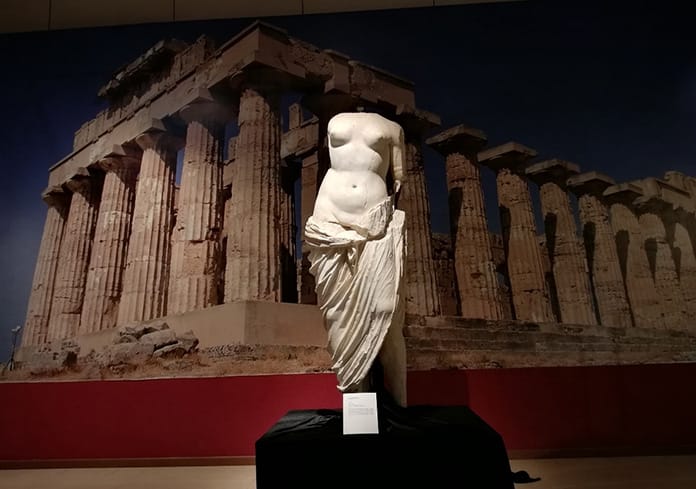
Three-dimensional shaping: Illuminate the sculpture from multiple directions, using the combination of sidelight, top light and background light to show the three-dimensional sense of the sculpture. The sidelight can highlight the contour,
the top light shows the top details, and the background light is used for special light and shadow effects. Take the display of a marble sculpture as an example. The light at a 45-degree angle on both sides can well outline the shape of the sculpture,and the light at the top illuminates key parts such as its face.Material performance: Choose the appropriate lighting color temperature according to the material of the sculpture. For metal sculptures, cold tones (4000 – 5000K) lights can highlight their luster and texture; for stone sculptures, warm tones(2700 -3000K) lights may better reflect their simple and heavyfeeling.
>
Special exhibit lighting
For light and shadow art works, installation works that can use light and shadow changes to express artistic ideas require precise control of the direction, intensity and dynamic changes of lighting. You can use an adaptable intelligent lighting system to program according to the requirements of the work to realize the timing of light and shadow or interact with the audience. Light-sensitive exhibits, such as ancient paper calligraphy and painting, watercolor painting, etc., are lit with low illumination. In addition, a sensing device can be installed to light up when the audience approaches, keeping the brightness low to reduce the time for the exhibits to be lighted.
>
Lighting of key exhibits
In art galleries or galleries, there will be one or more key works, usually paintings or photographs, most of which are very expensive or made by celebrities. Such works need to highlight their effects separately in the exhibition hall, so that they can be used as the visual focus of the whole exhibition and attract more audiences to appreciate them. In this case, we will use projection or interception, and the lighting effect is similar to the light transmission in the display screen.

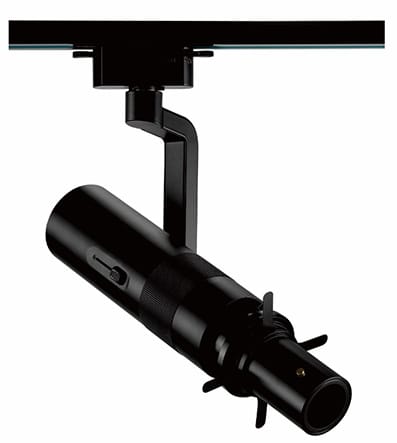
SK-ZOOM cut-off series lamps with power in the 20W-30W range. According to the size of the painting, key lights can be projected into the painting by cutting lights, so as to play the effect of only painting without illuminating the wall. However,this kind of projection or light capture lighting method is not suitable for wide use in all works in the exhibition hall. If used in a large range, the lighting contrast of the whole exhibition hall will be very high, which can easily cause visual fatigue of
the audience.