No products in the cart.
Your Location:
>
Restaurant hotel lighting
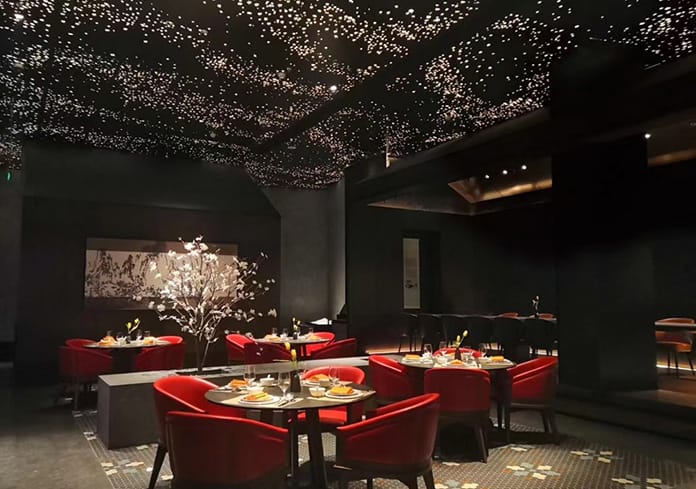
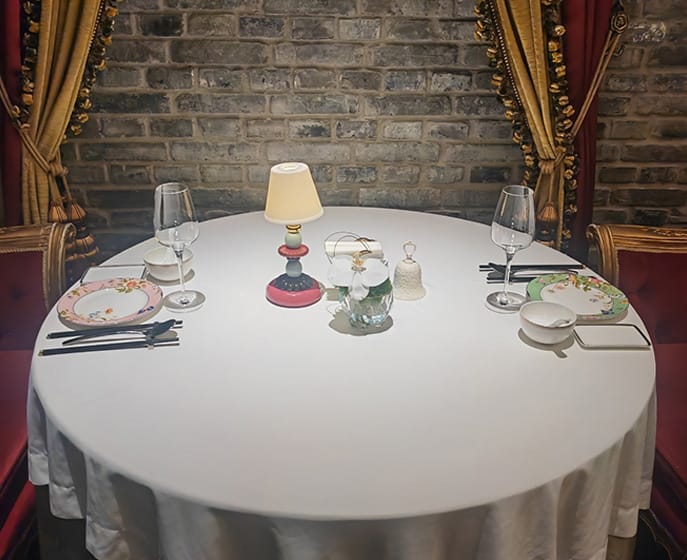
The application and design of restaurant lighting should comprehensively consider atmosphere creation, functional requirements and aesthetic effects. The functional lighting of the restaurant, such as dining tables, corridors and other areas, are the main areas for lighting design and application. At the same time, it is also very important to create a lighting atmosphere, such as color temperature and brightness, which will give customers a very intuitive feeling. Finally, the lighting style is matched with the theme of the restaurant, and the light and shadow are better integrated.
>
Restaurant Functional Area Lighting
Dining table lighting: The dining table is the core of the dining area. E27 lamps can be used, generally about 70-80 cm away from the table and installed on the chandelier. Embedded lamps or track lamps can also be installed on the ceiling. The lamps can be adjusted to focus by 8°-50°, and the power is between 9-15 watts. The appropriate light output angle can be adjusted according to different dining table sizes. Accurate dining table lighting, coupled with ultra-high color rendering Ra>95, can make the color of the food attractive.
Auxiliary lighting: install light strips, or small wall lamps, in the wall around the dining table or in the wire groove at the top of the ceiling. Embedded ceiling lamps and grille lamps are installed on the ceiling to provide supplementary auxiliary lighting. The auxiliary lighting echoes the key lighting of the dining table, and the comfortable lighting contrast creates a warm atmosphere, which can also increase the artistic sense of the restaurant and improve the grade of the restaurant. When the key lighting of the dining table is dim or obstructed, these auxiliary lamps can ensure the brightness of the dining area.
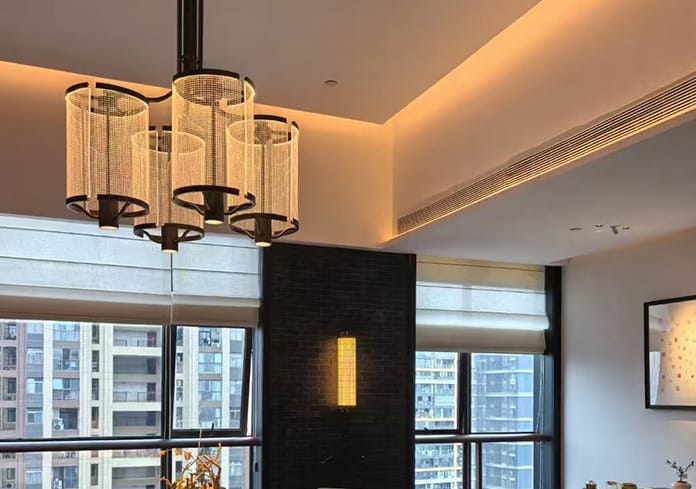
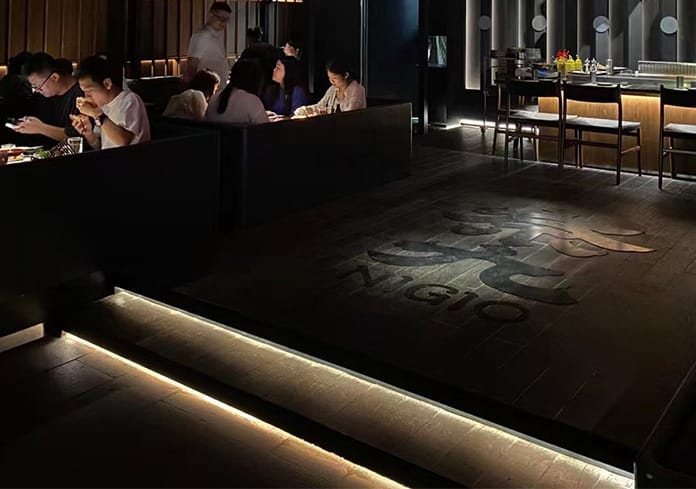
Aisles and corridors: First of all, ensure sufficient brightness to prevent customers from falling down due to lack of light. Generally, the illuminance of aisles and corridors is 50-100 lux. Embedded downlights can be used as the main lighting lamps, and they can be installed evenly on the aisle ceiling to ensure the even distribution of light. Some decorative lighting can be added appropriately. For example, installing wall lights on the wall of the aisle can not only provide auxiliary lighting, but also serve as a decorative element to enhance the sense of space and hierarchy of the aisle.
>
Light atmosphere creation
Color temperature selection: Warm color temperature(2700K – 3000K) can create a warm and comfortable diningatmosphere and make food look more attractive. For example,seafood-themed restaurants can also consider using cold color temperature (4000K-5000K) to create a fresh feeling and highlight the freshness of seafood.Brightness adjustment: Adjust the brightness of the lights according to the operating hours and scenes of the restaurant. During lunch and dinner, the brightness is appropriately raised so that guests can clearly see the food and surroundings; during afternoon tea or bar hours, the lights can be dimmed to create a relaxed atmosphere.

>
The lighting style matches the theme of the restaurant
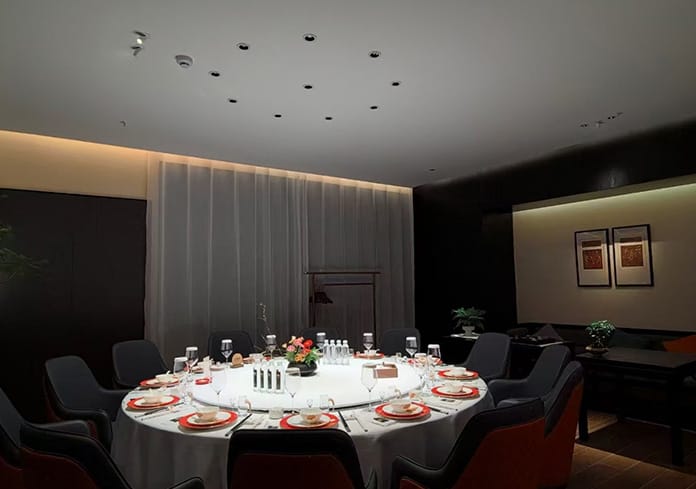
Chinese restaurant: You can choose lamps with Chinese elements, such as wooden carved chandeliers, wall lamps with Chinese pattern lampshades, etc., which complement the Chinese decoration style. The lighting color of the Chinese restaurant is mainly warm tones, which can give people a warm and elegant feeling. In terms of light and shadow effects, Chinese stained windows, screens and other elements can be used to create interesting light and shadow. When the light is projected on the ground or wall through these elements, it can add a Chinese atmosphere.
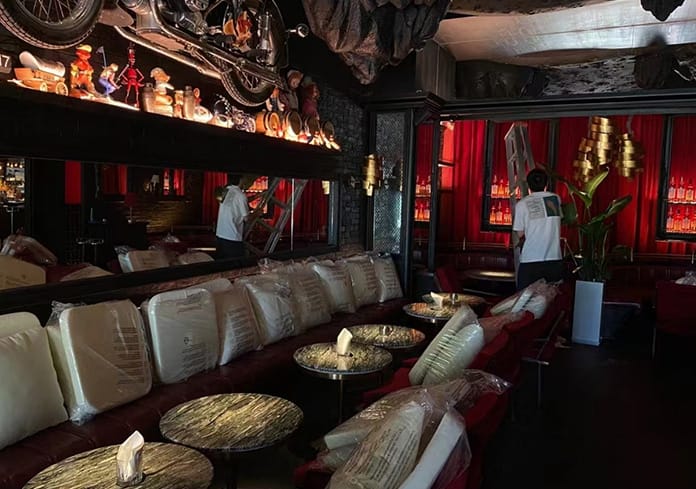
Theme restaurant: If it is a restaurant with a specific theme, you need to choose the lighting color and atmosphere according to the theme.
For example, tropical-themed restaurants can use warm-toned lights to simulate sunlight, and appropriately match some green lights to represent plants. The theme restaurant can use dynamic lighting to set dynamic effects such as flashing frequency and color changes according to different themes, increasing the fun and festive atmosphere of the restaurant and bringing customers a unique dining experience.
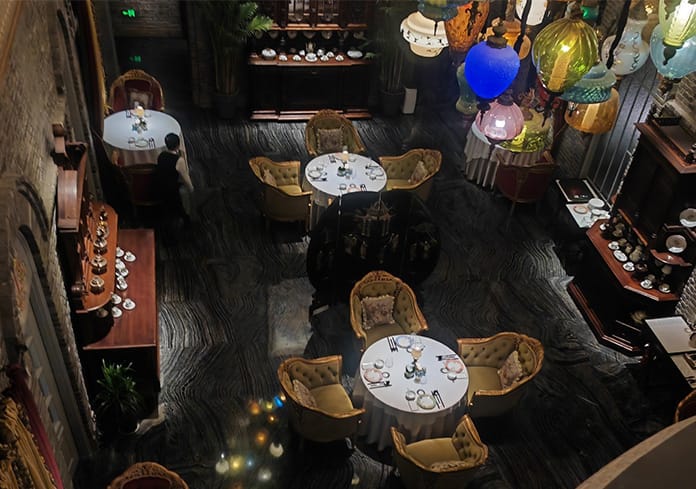
Western-style restaurants: Western restaurants usually pursue a romantic feeling and elegant atmosphere.
Warm tone lighting is the key. The color temperature is generally between 2700K and 3500K.
This warm light can create a warm and comfortable atmosphere and make customers feel relaxed. At the same time, the lighting style should be consistent with the overall decoration style of the western restaurant.